Any Bathroom Journal · Everyday design
Most people spend more time choosing bathroom colours than thinking about where soap residue will collect. Yet cleaning is part of living with the room long after the renovation is finished.
An easier-to-clean bathroom does not have to look plain. It starts with choosing surfaces you understand, keeping everyday items organised and making the areas that need attention easier to reach.
Choose tile for the location—not just fewer grout lines
Large tiles can reduce the number of joints across a wall, giving it a simpler appearance. That does not mean the largest tile is the best choice everywhere.
A shower floor has different requirements from a feature wall. Confirm that the selected tile is suitable for its intended use and works with the proposed drainage and floor design. Ask to see the surface texture in person rather than relying on a small online photograph.
For cleaning, follow the tile and grout manufacturers’ instructions together. A cleaner suitable for one part of the installation may not suit another. Daltile’s care guidance specifically addresses that compatibility.
Ask about the grout—not only its colour
Grout appearance is one choice; its care requirements are another. Ask which product is proposed, whether it needs sealing and which cleaning products are suitable.
Avoid treating “sealed” or “epoxy” as another way of saying “never needs cleaning.” Daltile notes that neither sealing nor epoxy grout guarantees against surface buildup or discolouration.
Keep the exact product name with your renovation records. Manufacturer resources, such as MAPEI’s care and maintenance range, are more useful when you know what was installed.
Look at shower glass from the cleaner’s point of view
Before choosing an enclosure, ask yourself how you would reach every surface.
Can you clean where sliding panels overlap? Is the bottom guide accessible? Can you reach the outside of a fixed screen without squeezing past the vanity? Fewer visible metal parts may create the appearance you like, but access still matters.
Protective glass treatments have their own care instructions. They are not permission to use any cleaner. For example, Kohler advises against abrasive cleaners on its CleanCoat-treated glass. Follow the guidance for the actual product selected.
Give bottles and towels a proper home
A shower niche can keep bottles off the floor, but choose its size and position around what you use. More shelves mean more surfaces to wipe.
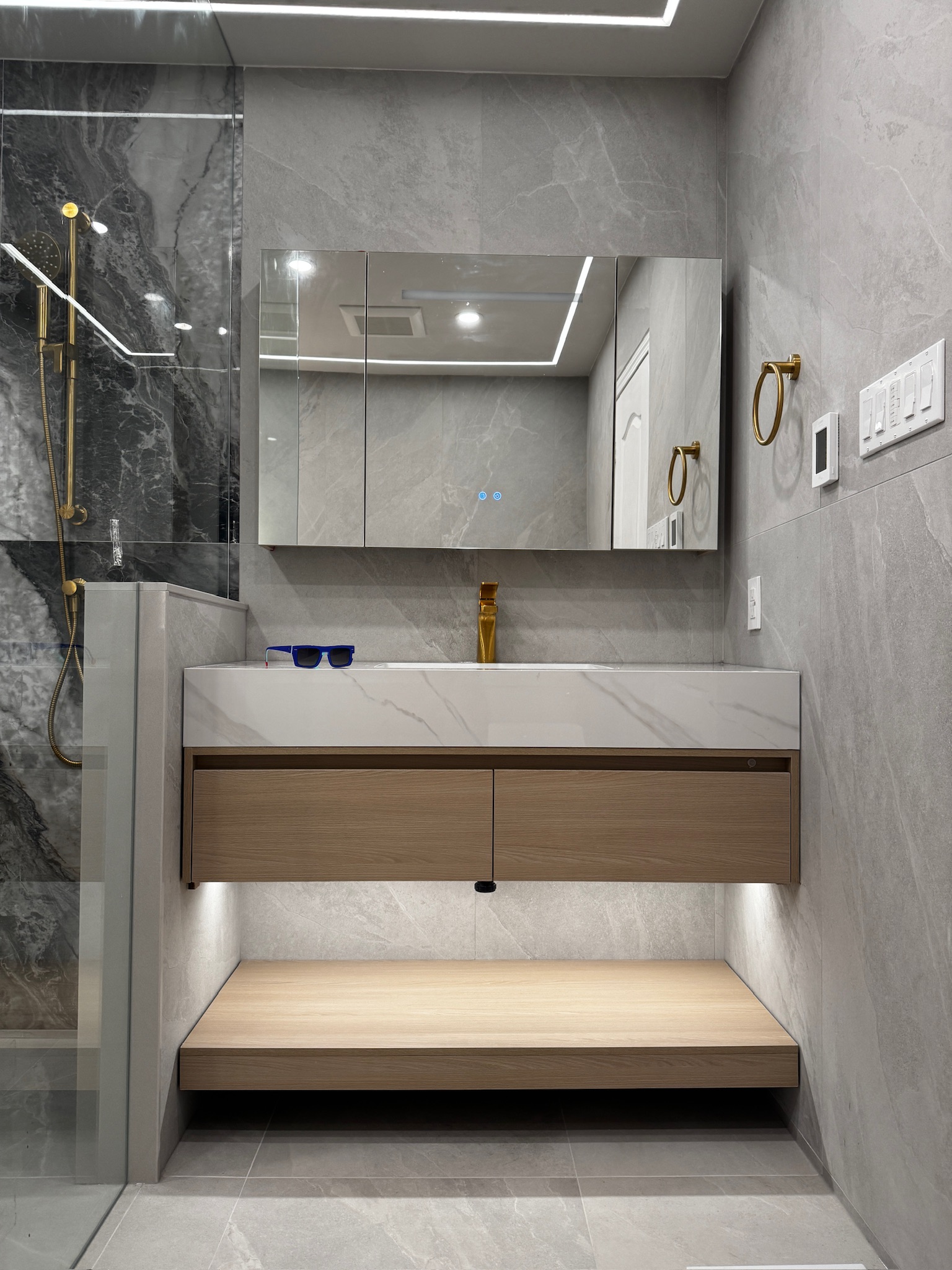
The same principle applies at the vanity. Enough usable drawer space can help keep the countertop clear. A floating cabinet may make floor access convenient, while a cabinet on short legs can leave a gap that is harder to reach. Check the arrangement with your usual cleaning tools in mind.
Browse our completed bathroom projects and notice the storage, glass and clear floor space—not just the finishes.
Before finalising your selections
- Can I comfortably reach the surfaces that need regular cleaning?
- Where will bottles, towels and everyday toiletries live?
- Which products require sealing or special care?
- Which cleaners should be avoided?
- Can guides, drains and other serviceable parts be accessed as designed?
- Will I receive the product names and maintenance instructions?
No bathroom is maintenance-free. The aim is a room whose care fits your routine, without sacrificing the details you enjoy.
Planning a renovation? Tell us what is difficult about your current bathroom. Awkward corners, cluttered counters and hard-to-reach glass are useful things to discuss before the new layout is agreed.