Any Bathroom Journal · Vanities and storage
A floating vanity leaves the floor visible beneath the cabinet. A floor-standing vanity reaches the floor or sits on legs. Both can work beautifully—but neither is automatically the better choice for a small bathroom, a family bathroom or a modern design.
Before comparing colours and handles, think about what the vanity needs to do every morning.
Start with the things you actually store
Empty your current vanity and make three groups: everyday items, occasional supplies and things that belong elsewhere.
Now look at the space those items need. Tall bottles, a hairdryer and folded towels do not necessarily fit into the same drawer arrangement. A wide cabinet can still be frustrating if its shelves or plumbing cut-outs leave the wrong kind of storage.
Open the drawers on any vanity you are considering. Check their usable depth and height, not only the cabinet’s outside measurements. IKEA Canada’s bathroom planning guide also highlights available space and existing plumbing as important starting points.
When a floating vanity makes sense
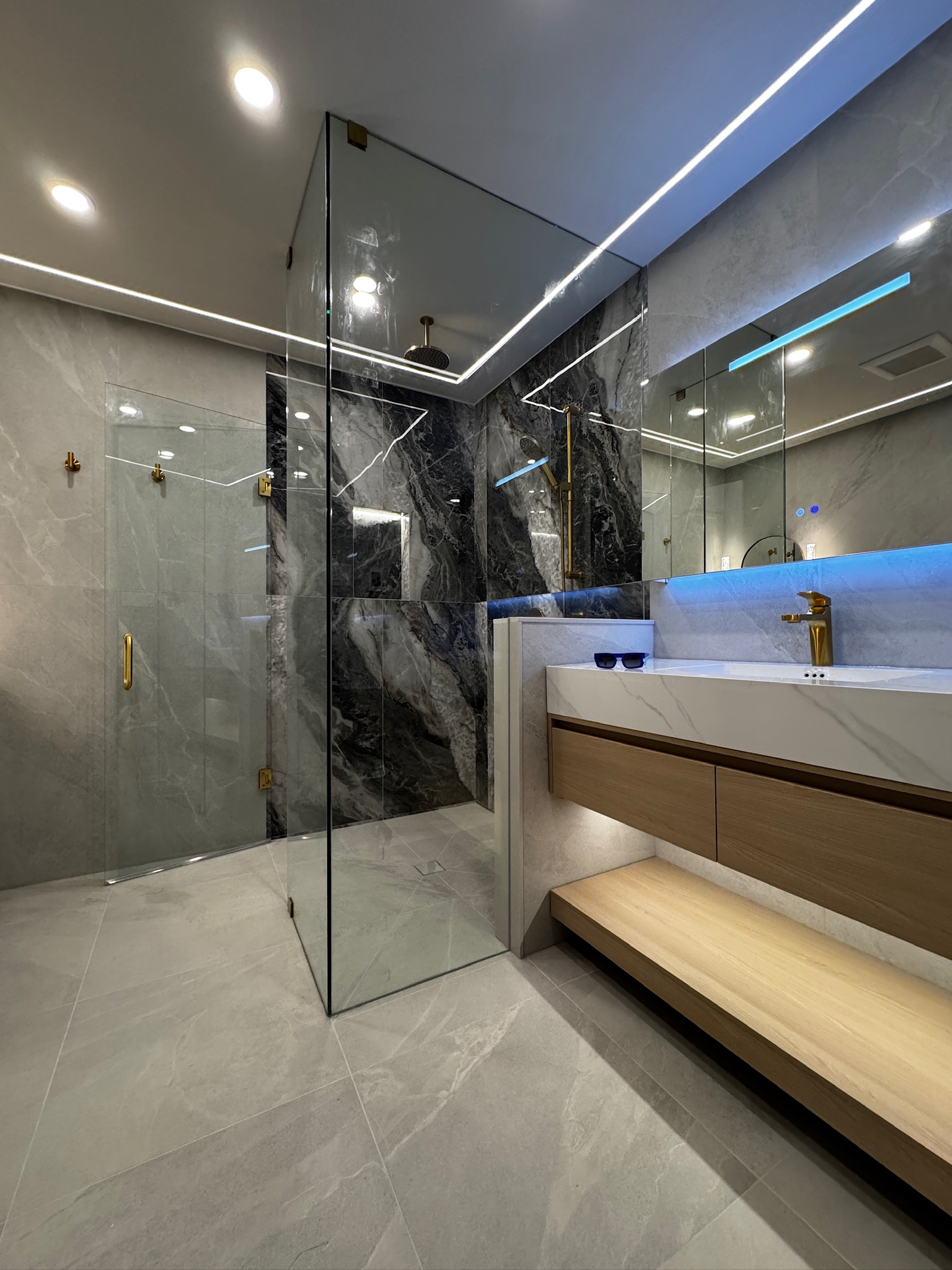
A wall-mounted cabinet can give the room a lighter appearance by keeping the floor beneath it visible. That open space may make cleaning underneath more convenient—provided there is enough room to reach comfortably.
The trade-off is not always less storage. Some floating models have generous drawers; others are deliberately shallow. Compare the actual interiors rather than assuming every wall-mounted vanity is compact.
Installation needs to be considered early. The selected cabinet, sink and countertop must be supported and fixed according to their manufacturer’s requirements. Ask what the existing wall needs and whether the plumbing arrangement works with the drawers.
Our project photographs are a starting point for discussing the appearance—not a specification for your bathroom.
When a floor-standing vanity makes sense
A floor-standing cabinet can give a bathroom a more substantial, furniture-like appearance. Depending on its design, it may provide useful space for bulky items behind doors.
Look carefully at the base. A cabinet with a recessed plinth, one with open legs and one with a lower shelf will each create a different cleaning routine. Narrow gaps at the sides can also be awkward to reach.
Do not assume that legs remove the need for wall fixing. Requirements vary by product. For example, IKEA’s HAVBÄCK buying guide specifies wall mounting even where supporting legs are selected.
Check the sink and countertop together
Two sinks sound convenient, but decide whether you need them more than uninterrupted counter space and storage. Think about who uses the room at the same time.
Check faucet compatibility, the sink’s position and how much space remains for everyday items. Assess the overall height with the countertop and basin included, especially if you are considering a vessel sink.
Your vanity selection checklist
- Width and depth, including handles and countertop overhangs.
- Clearance for drawers, doors and people moving through the room.
- Usable storage around the plumbing.
- Finished sink height for the people using it.
- Wall-fixing and support requirements.
- Access to plumbing for maintenance.
- Care instructions for the cabinet, countertop and basin.
The best vanity suits your room and belongings without making everyday use awkward. Add your preferences to our bathroom choices worksheet, or get in touch to discuss your renovation.